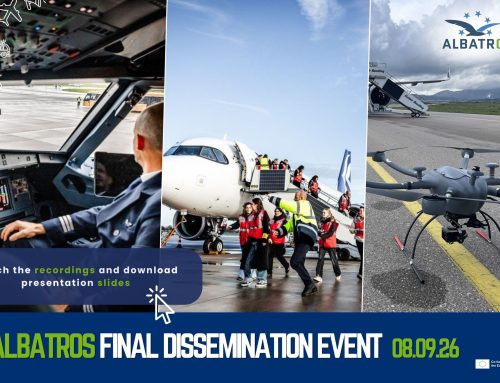


How ALBATROS Demo 14 is validating aerial intelligence to master the risks of hydrogen and electric flight.
The aviation industry is undergoing a historic transformation. As we move towards a net-zero future with the introduction of hydrogen and high-voltage electric propulsion, we must ensure that our safety standards evolve in parallel. These new energy carriers introduce novel hazards, such as invisible hydrogen flames or thermal runaway in batteries, that require a rethinking of traditional emergency response.
This is the mission of theALBATROS project. We are not just modeling these risks; we are validating solutions in the real world to ensure high levels of safety and resilience.
A pan-European validation effort
To prove that these concepts work across different operational environments, the ALBATROS consortium conducted two major integrated exercises: one atRotterdam The Hague Airport (RTHA)on November 25, 2025, and another atAthens International Airporton December 4, 2025.
These events were not isolated tests. They were complex, multi-stakeholder simulations bringing together three key project solutions:
Demo 4:Flight operations and cockpit procedures for a hydrogen emergency landing.
Demo 2:Ground response, firefighting, and passenger evacuation.
Demo 14:Aerial support using Unmanned Aircraft Systems (UAS).
The scenario: A hydrogen emergency
Both exercises followed a rigorous high-stakes scenario. A simulated hydrogen-powered aircraft (represented by an Aegean Airlines A320) declares a distress signal 10 minutes before arrival due to a suspected leak. Upon a safe emergency landing and subsequent taxiing, the leak escalates into a hydrogen fire.
This creates a critical challenge for the Incident Commander. Hydrogen fires can be nearly invisible to the naked eye in daylight and the heat signature is intense. In such a chaotic environment, ground visibility is not enough.
Demo 14: The drone as a strategic asset
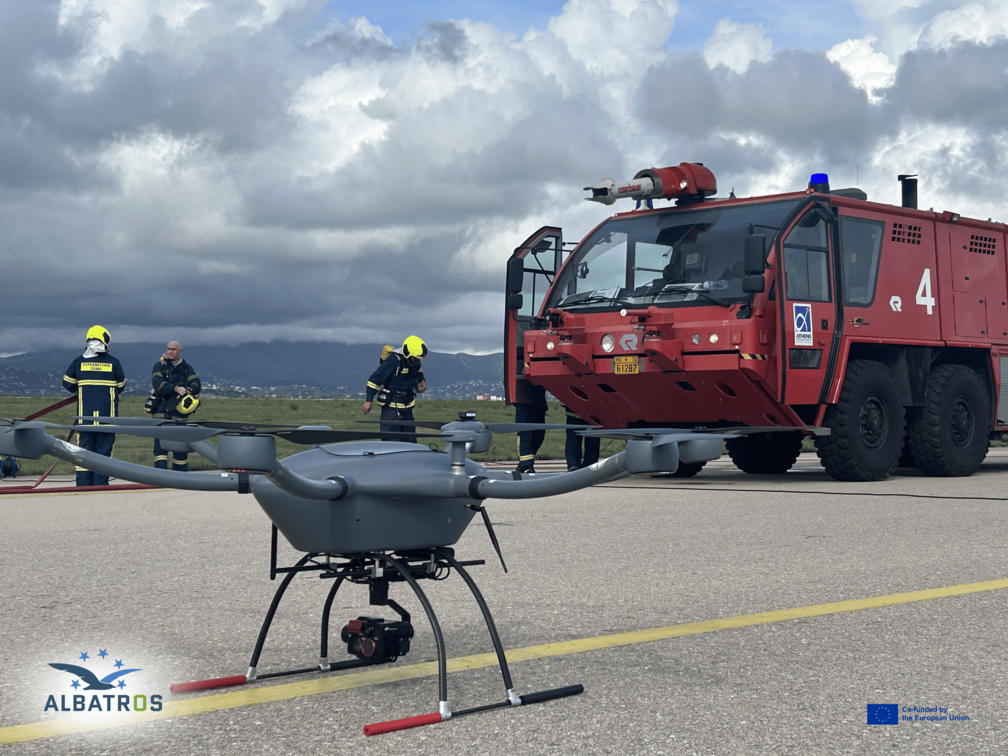
This is whereDemo 14, led by theNetherlands Aerospace Centre (NLR), proved its operational value.
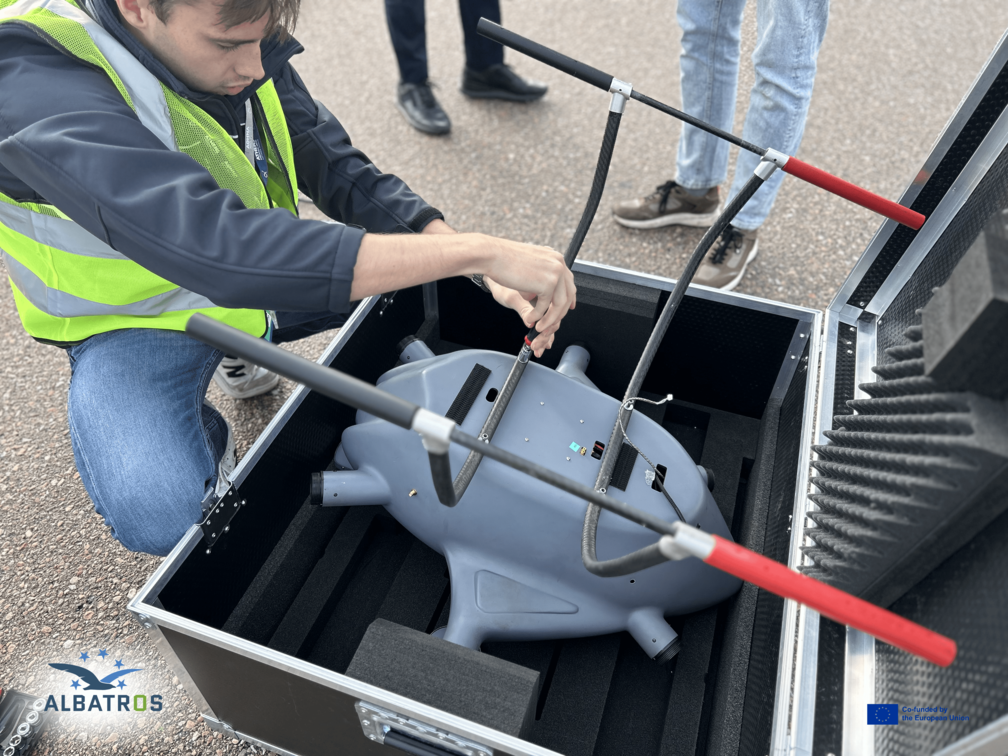
In both Rotterdam and Athens, the ALBATROS drone (Luna1) was deployed to act as an advanced sensor platform. Flying within the controlled airspace (CTR) while the airport remained fully operational, the drone provided two decisive advantages that bridged the gap between the known and the unknown.
1. Visualizing the invisible threat:Using advanced thermal infrared sensors, the drone scanned the aircraft fuselage and the surrounding tarmac. It successfully detected the heat signatures of the simulated hydrogen fire, allowing firefighting teams to see the invisible threat. This data enabled them to position their vehicles safely and suppress the fire without endangering their crews.
2. Monitoring mass evacuation:Simultaneously, the drone provided a real-time aerial overview of the evacuation of passengers. This allowed crisis managers to verify that escape slides were functioning correctly and that passengers were moving safely away from hazardous zones.
Collaboration for a safer future
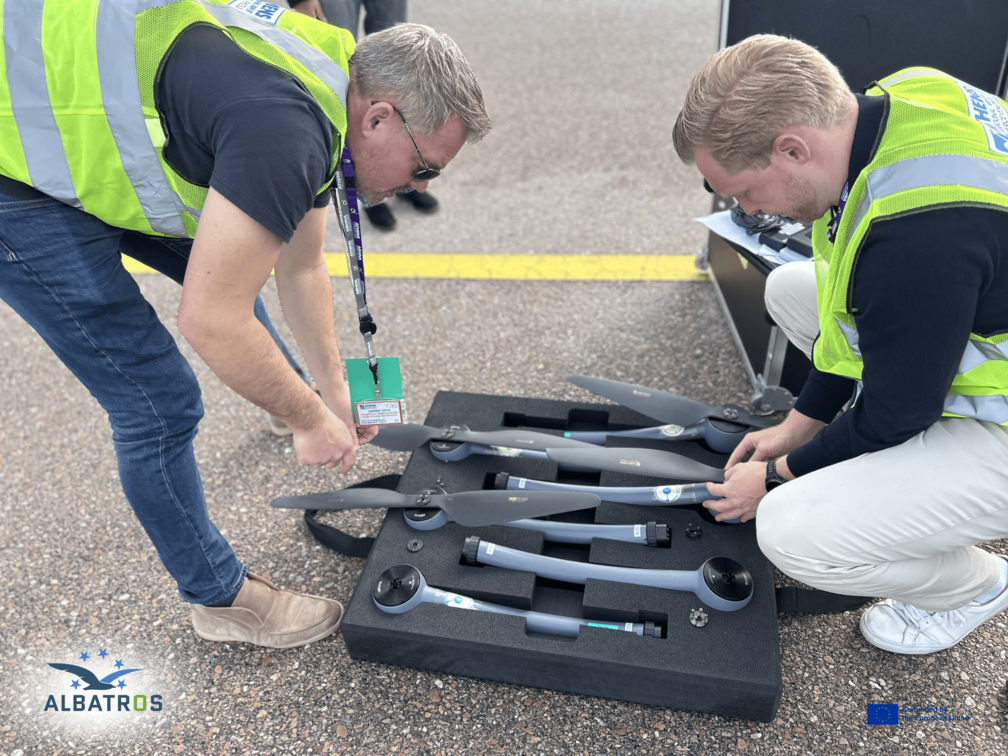
These exercises were a joint effort involvingRotterdam The Hague Airport, the Airport Fire Department, Aegean Airlines, LVNL, Pipistrel Aircraft, and NLR.
By seamlessly integrating drone operations with Air Traffic Control and ground emergency services, ALBATROS has demonstrated that aerial intelligence is essential for the future of aviation. The data collected from these dual campaigns is now being used to define the Standard Operating Procedures (SOPs) that will keep passengers and crews safe in the era of sustainable flight.
Stay connected
Visit ourwebsiteto read the news, explore ourdeliverables, and join the ALBATROScommunity.
This activity is part of the Horizon Europe funded ALBATROS project, Grant Agreement No 101077071.