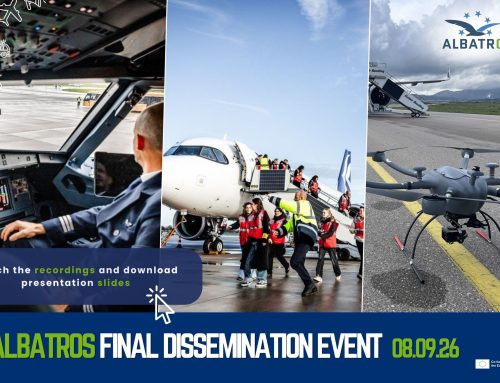


Have you ever wondered what happens when an airport has to shut down because of a heatwave, when a runway gets flooded, or when flights get delayed due to extreme winds? These situations are becoming more frequent as climate change accelerates. What once were just hypothetical risks are now real challenges that European aviation must face. To tackle this, two important projects—ALBATROSandAEROPLANE—are stepping in with concrete, coordinated solutions.
A Framework to Understand Airport Vulnerability to Climate Change
ALBATROS(Advanced systems and solutions for better practices against hazards in the aviation system) is an EU-funded research initiative focused on helping airports prepare for the future. The project aims to:
- Identify physical risksthat climate change and emerging technologies like drones or alternative fuels might pose to aviation.
- Create a specific framework for assessing climate risksat airports.
- Help airports integrate climate adaptation strategiesinto their operational and infrastructure plans.
ALBATROS works hand-in-hand withAEROPLANE(Achieving Efficient and Robust Operations in a climate-neutral air transport System), combining their expertise to develop sustainable operational strategies.
The results? They’re now publicly available in a detailed report calledDeliverable D2.2 – Analysis of the Impact of Climate Change on Airports in Europe.
Why We Need to Act Now
The data collected by ALBATROS confirms what many have feared: Europe’s airports are already feeling the effects of climate change.
- Heatwavesare impacting aircraft performance and runway safety,
- Extreme windsare disrupting flights and causing delays,
- Heavy rainfallleads to flooding that stresses airport infrastructure.
A study by ACI Europe has flagged these asgrowing threats. ALBATROS takes this a step further byquantifying these riskswith scientific and predictive methods.
Looking Closer: A Study of Five European Airports
To make sure their framework is practical and realistic, the ALBATROS team studied five airports across Europe, each with its own climate challenges:
- Alicante, Spain– frequent and long-lasting heatwaves
- Athens, Greece– rising temperatures and summer peaks
- Rotterdam, Netherlands– strong winds and unusual rainfall
- Ciampino, Italy– vulnerability to combined events like heat and storms
- Pantelleria, Italy– geographic isolation and thermal stress
By analyzing such diverse environments, they could test and refine their methods, identifyingpatterns of vulnerabilitythat could apply to many other airports.
How the Framework Works
TheClimate Risk Assessment Frameworkdeveloped by ALBATROS breaks down into three main steps:
- Identifying Climate Hazards
Heatwaves, windstorms, heavy rain — looking at their frequency, intensity, and seasonality based on historical data and future projections. - Analyzing How These Hazards Affect Airport Assets
This includes runways, terminals, navigation systems, and air traffic control operations. - Evaluating How Strong and Functional These Assets Are
Assessing impacts on operations such as delays, disruptions, and costs, including direct and indirect effects on safety and performance.
The goal is areplicable, scalable toolthat airports can easily integrate into their decision-making.
Key Findings and What Can Be Done
Here’s what ALBATROS found—and some ideas for how airports can respond:
- Extreme Temperaturescause runway material degradation and affect takeoff performance.
Solutions:resilient pavement materials, flight schedule adjustments. - Strong Windscreate instability during landings and takeoffs and risk ground handling operations.
Solutions:adapting air traffic control planning, reinforcing lightweight structures. - Heavy Rains and Floodingoverwhelm drainage systems and hinder passenger and cargo access.
Solutions:hydraulic redesign, passive water protection measures.
Working Together: ALBATROS and AEROPLANE’s Partnership
These two projects complement each other perfectly. WhileALBATROS focuses on risk assessment,AEROPLANE develops adaptive operational strategies. Together, they’ve built ashared databaseto avoid duplicating efforts and to help integrate their findings into policies and regulations. This collaboration is a great example of teamwork under the Horizon Europe program.
What’s Next?
With the publication of Deliverable D2.2, ALBATROS is calling for action:
- Invest in climate-resilient infrastructure.
- Make operational planning flexible, using predictive weather forecasts.
- Include climate resilience in airport Master Plans and regulations.
The team will continue updating their models with new data and expanding stakeholder engagement to keep solutions relevant and effective.
 Download the full report Deliverable D2.2here
 For technical questions,visit.