

As we move closer to our final project showcase this September, we want to look back and highlight one of the most significant milestones of our year. On April 22, theALBATROS consortiumparticipated in a dedicated online session with theEUROCAE WG80expert committees. The primary objective of these international working groups is to collect best practices and develop guidelines to support the qualification and certification of hydrogen fuel cell systems in aviation. To support this ongoing work, we shared the empirical data and stakeholder feedback gathered from our recent physical demonstrations.
Simulating an inflight emergency on the ground
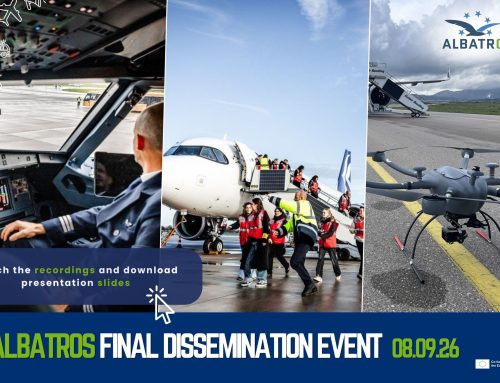
Vincent van Hasselt from consortium partnerPipistrelpresented the core outcomes of our large scale airport demonstrations held at Rotterdam The Hague Airport and Athens International Airport. The presentation detailed a highly realistic scenario. Using an A320 neo provided byAEGEAN Airlines, the consortium simulated the landing of a hydrogen electric aircraft experiencing an inflight hydrogen leakage. Upon landing, the exercise tested the immediate evacuation and firefighting response, executing the new methods and procedures developed by ALBATROS. Crucially, the emergency ground response was actively supported by a drone equipped with thermal imaging to monitor the situation in real time.
Key takeaways for standardisation
The session focused on translating these field tests into actionable regulatory guidelines. Vincent outlined the practical challenges encountered during the demonstrations, the mitigations developed by ALBATROS, and the direct feedback collected from the stakeholders involved. Several key takeaways were highlighted for the committees:
Multi stakeholder training: the absolute necessity of coordinated training programs that integrate both hydrogen handling and concurrent drone operations on the airfield.
Emergency response readiness: the need for comprehensive evaluations of current airport operations, specifically focusing on firefighter training and upgraded equipment to tackle new energy hazards.
During the subsequent Q&A, the experts discussed future research topics and the critical need to better understand the evolving designs of hydrogen systems. As the development of hydrogen electric aircraft progresses, the operational lessons learned from the ALBATROS demonstrations will be essential to derive and implement effective mitigations for handling future emergencies.
Discover more at our upcoming final event
To explore the complete findings from our airport demonstrations and interact directly with our physical prototypes, we invite you to join the ALBATROS Final Dissemination Event. The event will take place on September 8, 2026, on site at the NLR Facilities in the Netherlands and online. You can secure your spot andregister for the event here.
If you would like to know more about our standardisation activities, or have any specific questions regarding our research outcomes, please feel free to contact our team. We would be happy to discuss our findings with you.